


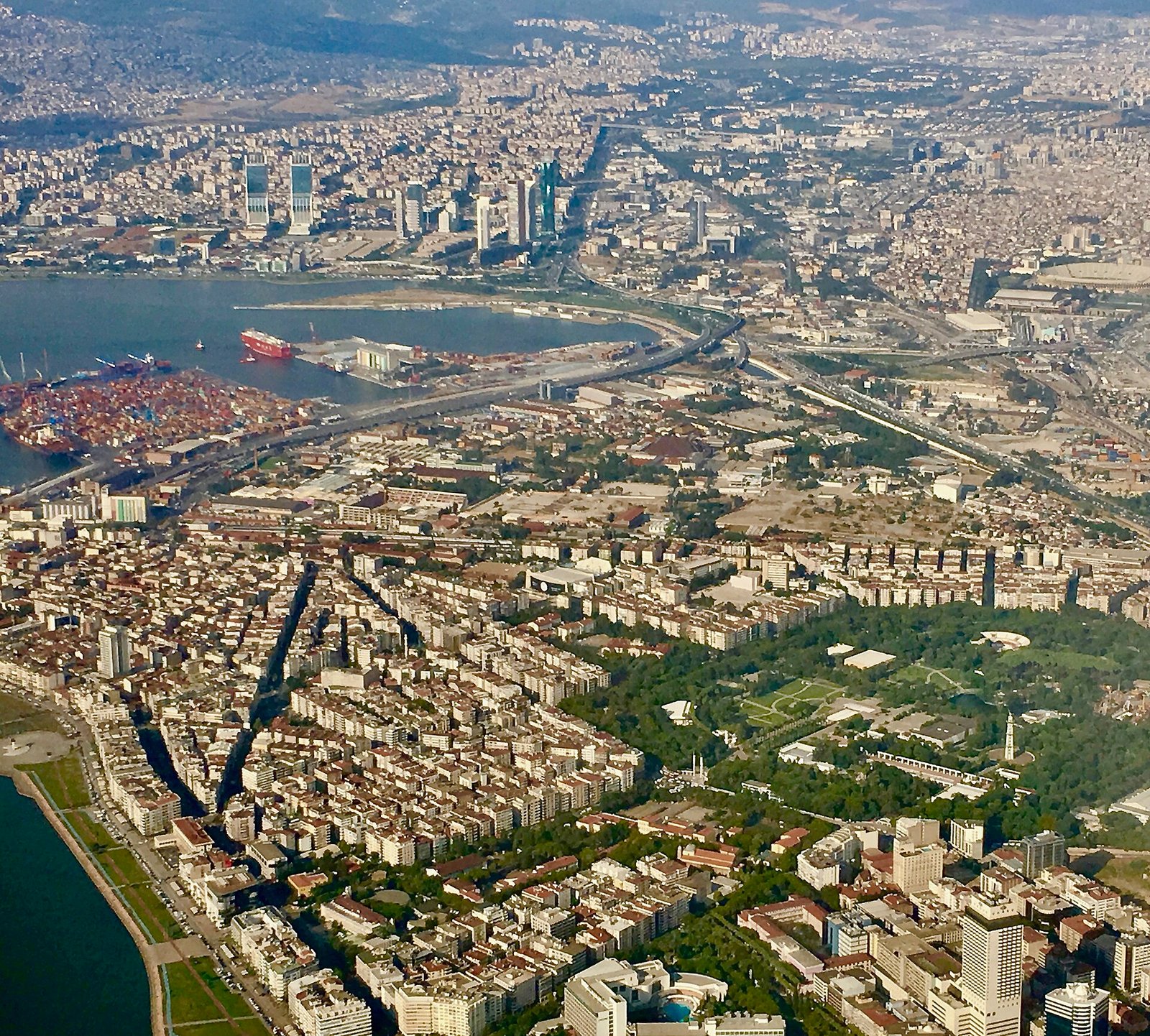
It is tempting to imagine that the Mürselpaşa Underpass will open one morning and İzmir’s traffic will suddenly breathe again. Major road projects are often presented that way: remove one bottleneck and the entire city begins to flow. The likely reality is more nuanced. Mürselpaşa may redistribute movement rather than eliminate congestion, save time on one approach while shifting queues to another, and create a confusing adjustment period as drivers and navigation apps learn the new pattern.
Mürselpaşa Boulevard is not an isolated junction. It sits between the port, Halkapınar, wholesale and industrial areas, the city centre and important north–south connections. The useful question for residents is therefore not “Will traffic disappear?” but “Which journeys become more predictable, at what times, and what happens at the next junction?”
What the underpass is designed to change
Private cars, employee shuttles, buses, delivery vehicles and port-related freight converge in the area during the same limited time windows. Turning movements and traffic lights interrupt the main flow. Separating one direction below junction level should reduce some stop–start movement.
That can be valuable, especially for through traffic. Yet extra capacity in one segment can simply move a queue downstream if exits, lane merges and surrounding signals are not adjusted. The project should be judged as part of a corridor, not as a concrete structure in isolation.
Who may notice the difference first
Drivers travelling between Halkapınar and central Konak, between northern approaches and the centre, or around the port logistics zone may experience shorter waits at particular hours. For commercial traffic, predictability can matter more than a dramatic time saving. A reliable 25-minute trip is often easier to plan than a journey that varies between 15 and 45 minutes.
Bus passengers will experience the project differently. A bus may cross the new section quickly but still lose time before entering it or after leaving it. Stop locations, temporary diversions and priority at nearby signals will determine whether public transport receives a real benefit.
Why the first week may feel worse
New infrastructure creates a learning period. Drivers change lanes late, search for old turns, follow inconsistent habits and react to temporary signs. Navigation services may recommend the new route to thousands of users at once. A road that appears faster can attract additional demand almost immediately.
For that reason, the first two or three days are a poor basis for judgment. A more meaningful comparison uses similar weekdays over several weeks, separating morning and evening peaks.
Measure your own journey instead of relying on impressions
If you use this corridor regularly, turn the change into a small personal experiment. Record your departure time, the time you reach the critical junction and total door-to-door duration for one week. Then test one realistic alternative—perhaps İZBAN plus metro, a ferry connection or a different departure time.
For someone travelling from Karşıyaka towards Konak, a 12-minute road saving may disappear while searching for parking. For a shift worker, leaving 20 minutes earlier may matter more than the new route itself. The most useful result is the one that reflects your entire journey, not only the underpass.
The secondary effects residents should watch
Traffic redistribution changes more than vehicle speed. Side streets may receive new shortcut traffic. Taxi stands and company shuttle routes may move. Faster vehicle flow can make pedestrian crossings less comfortable even when driving becomes easier. Lighting, pavement continuity and safe access to stops are therefore part of the project’s real performance.
Local businesses may also experience opposite effects. A shop that suffered during construction could gain visibility after reopening, while another may lose customers if cars no longer pause nearby. Urban infrastructure always creates winners, losers and adaptation—not only average travel-time statistics.
What success should look like
Counting how many cars pass through the underpass is not enough. Better indicators include bus punctuality, collision and near-miss patterns, queue lengths at surrounding junctions, pedestrian access and the variability of peak-hour travel times.
The Mürselpaşa Underpass will not solve İzmir’s transport problems on its own. If it is coordinated with surrounding signals, public transport and clear wayfinding, however, it can make one of the city’s most stressful corridors more predictable. In daily urban life, knowing that a trip will reliably take 30 minutes can be more valuable than occasionally completing it in 18.
How to judge the project after opening
The municipality has listed Mürselpaşa Underpass among the major transport investments targeted for service in 2026. The useful question is not whether one underpass “solves İzmir traffic”, but whether it removes a specific conflict point without simply moving the queue to the next junction.
| Indicator | What improvement would look like | Possible side effect |
|---|---|---|
| Peak travel time | More predictable rather than only occasionally faster | New congestion at the exit junction |
| Local access | Safer, clearer connections for neighbourhood streets | Longer detours for one direction |
| Public transport | Bus reliability improves through the corridor | Private-car capacity grows but buses gain little |
| Pedestrians | Continuous crossings and lighting | Road geometry becomes harder to cross |
Three realistic user scenarios
Daily commuter: compare door-to-door time for two weeks, not the first celebratory day. A five-minute average saving with much lower variability may be more valuable than one dramatic fast trip.
Local business: monitor loading access, visibility and short-stop behaviour. Construction completion can improve flow while changing how easily customers reach a shop.
Resident: check noise, night traffic and pedestrian routes. A transport project should be evaluated as a neighbourhood change, not only a vehicle count.
Project schedules can move. Check the latest municipal construction notice before publishing completion dates as final.
Official and useful links