

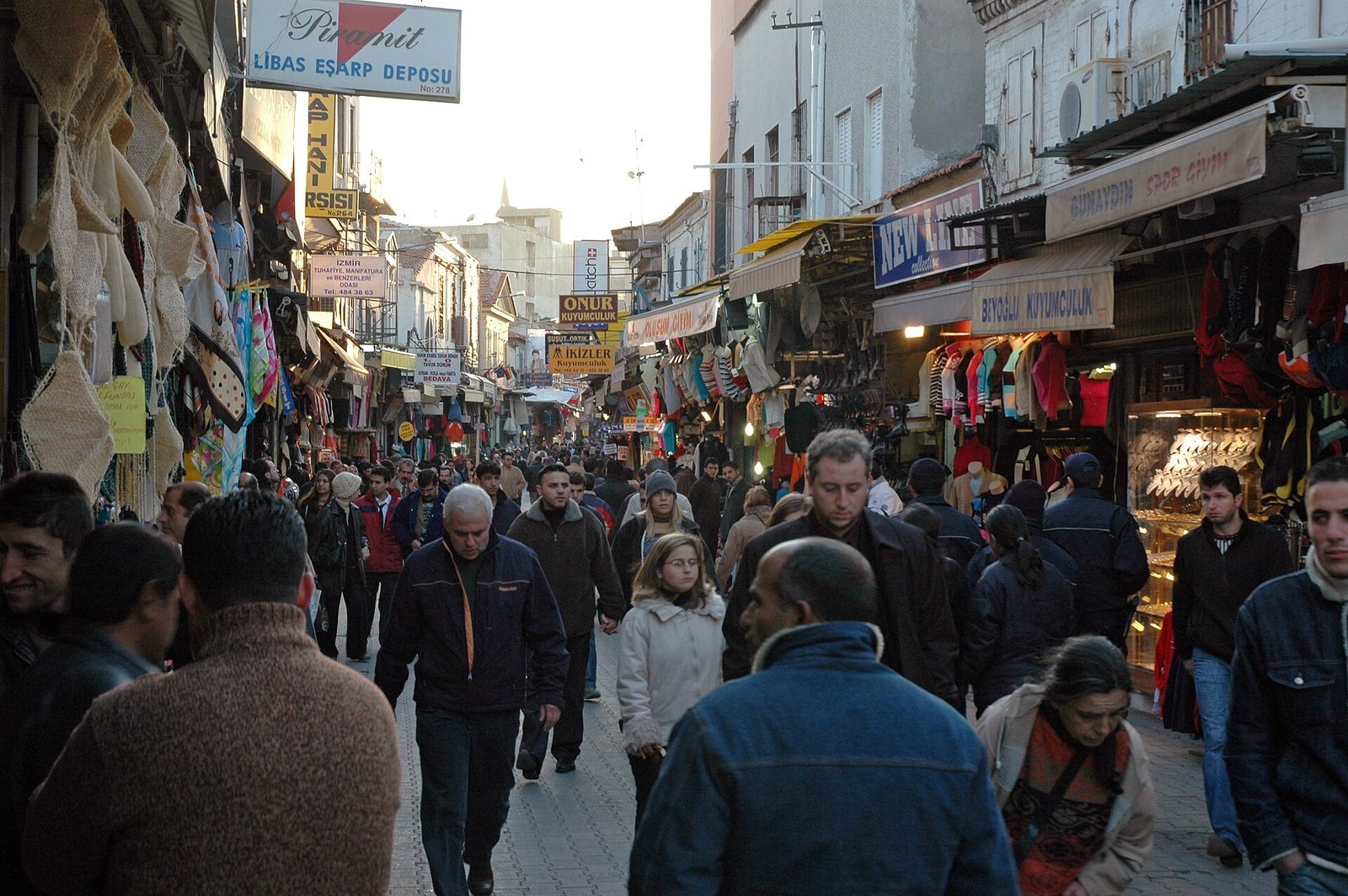
Enter Kemeraltı from Konak Square and the city suddenly narrows. The open horizon of the ferry terminal disappears; shade, voices and smells take over. One street is lined with wedding shops, the next carries coffee, metalwork, spices, jewellery and the lunchtime movement of people who actually work here. Calling Kemeraltı a “historic bazaar” is accurate but incomplete. It is also a functioning urban economy.
This is not a sight to complete in one day. The most rewarding visit chooses a theme and moves slowly enough to understand what each street is doing. Sit in a han courtyard, ask one shopkeeper a real question and look above the signs at the upper floors that most visitors miss.
09:30: arrive while the market is opening
A weekday morning is the easiest introduction. Shutters rise, deliveries arrive and the main corridors have not yet reached lunchtime density. From Konak Square, walk towards Anafartalar and make a deliberate effort to look up. Behind awnings and shop signs are façades, bay windows and traces of several periods of İzmir’s commercial history.
Kızlarağası Hanı is calmer early. Have coffee if you wish, but do not treat the courtyard only as a photograph. Watch how it still combines trade, meeting and pause.
Around Hisar: where the rhythm changes
The streets near Hisar Mosque become more intense. Food, coffee, shopping and through-traffic overlap. Instead of searching immediately for the “famous” shop, notice the different people using the district: workers on a short break, families preparing a wedding, wholesalers, visitors and residents returning to the same business they have known for years.
Tea is not always pressure to buy. You can accept it as conversation or decline politely. Ask before photographing people or the inside of a shop.
Havra Street: food as living history
Havra Street is more than a colourful market image. Historical sources describe the mixed commercial life of the area, and food trade remains part of its character. Ask where produce comes from, when it arrived and how it should be stored.
For spices and nuts, high turnover, clean containers and a fresh—not dusty—aroma are useful signs. Buy cheese, fish or other heat-sensitive food near the end of the visit rather than carrying it for hours.
Lunch: look beyond the social-media queue
Kemeraltı offers boyoz, söğüş, şambali, lokma, coffee, kebabs, fish and traditional workers’ restaurants. There is no single correct meal. Choose one main dish, one sweet and one coffee instead of turning lunch into a competitive tasting exercise.
Between noon and 13:30, small places filled with surrounding workers can be a useful clue. A short menu, visible prices, fast turnover and clean service may tell you more than online fame. Leave a reason to return.
The bargaining myth
Not every shop expects negotiation. Aggressive bargaining over food or clearly fixed-price goods can be disrespectful. With crafts, leather, antiques or jewellery, ask not only about price but material, workmanship, origin, fineness and return conditions.
For a significant purchase, compare at least three shops and request documentation. Words such as “local”, “handmade” and “antique” should begin questions, not end them.
Should you continue to the Agora?
If the weather and your energy allow, extending the route towards the Agora connects Kemeraltı’s modern trade with the older city. Do not underestimate the extra distance in summer heat. Check opening times and entry conditions before setting out.
It can be better to dedicate a separate visit to the Agora rather than forcing more kilometres into an already full day. Understanding Kemeraltı is not measured by step count.
A small code of respect
Traders move goods through narrow streets. Standing in the centre to record a long video can block real work. Ask permission before publishing close images of people. Observe dress, silence and visiting rules in places of worship.
Kemeraltı forms a major part of the Historical Port City of İzmir, on UNESCO’s Tentative List. Heritage here is not only restored architecture. It also depends on businesses being able to work and visitors resisting the idea that the district exists as an open-air film set.
Return with one theme
On a second visit, focus on coffee culture, hans, faith buildings, old books, jewellery, textiles or street food. The same lane at a different hour can feel like another place.
The day when you leave with the most shopping bags is not necessarily the day you understood Kemeraltı best. Sometimes the valuable moment is learning why a craftsperson chose a material or noticing a façade that had been invisible behind the commercial noise. Kemeraltı is not something to finish. It is a living archive through which İzmir can be read again and again.
A four-hour route with breathing space
- 09:30 Konak Square: enter before the main lunchtime crowd.
- 10:00 Kızlarağası Hanı: look at the courtyard, upper galleries and working shops before sitting for coffee.
- 11:00 Hisar–Anafartalar: compare architectural layers and everyday trade.
- 12:00 Havra Street: observe produce, pickles, spices and the food economy.
- 13:00 one proper lunch: choose a workers’ restaurant or a specialist rather than collecting random snacks.
Kemeraltı is part of İzmir’s Historic Port City, which is on UNESCO’s Tentative List. That status is not a theme-park label; it reflects a living commercial landscape where conservation and daily work must coexist.
A realistic spending method
Set three envelopes: food, small purchases and one considered object. Compare at least three shops for jewellery, leather, antiques or high-value food. Ask for weight, fineness, material, return terms and invoice where relevant. Bargaining is context-dependent; respectful questions work better than theatrical confrontation.
Official and useful links