


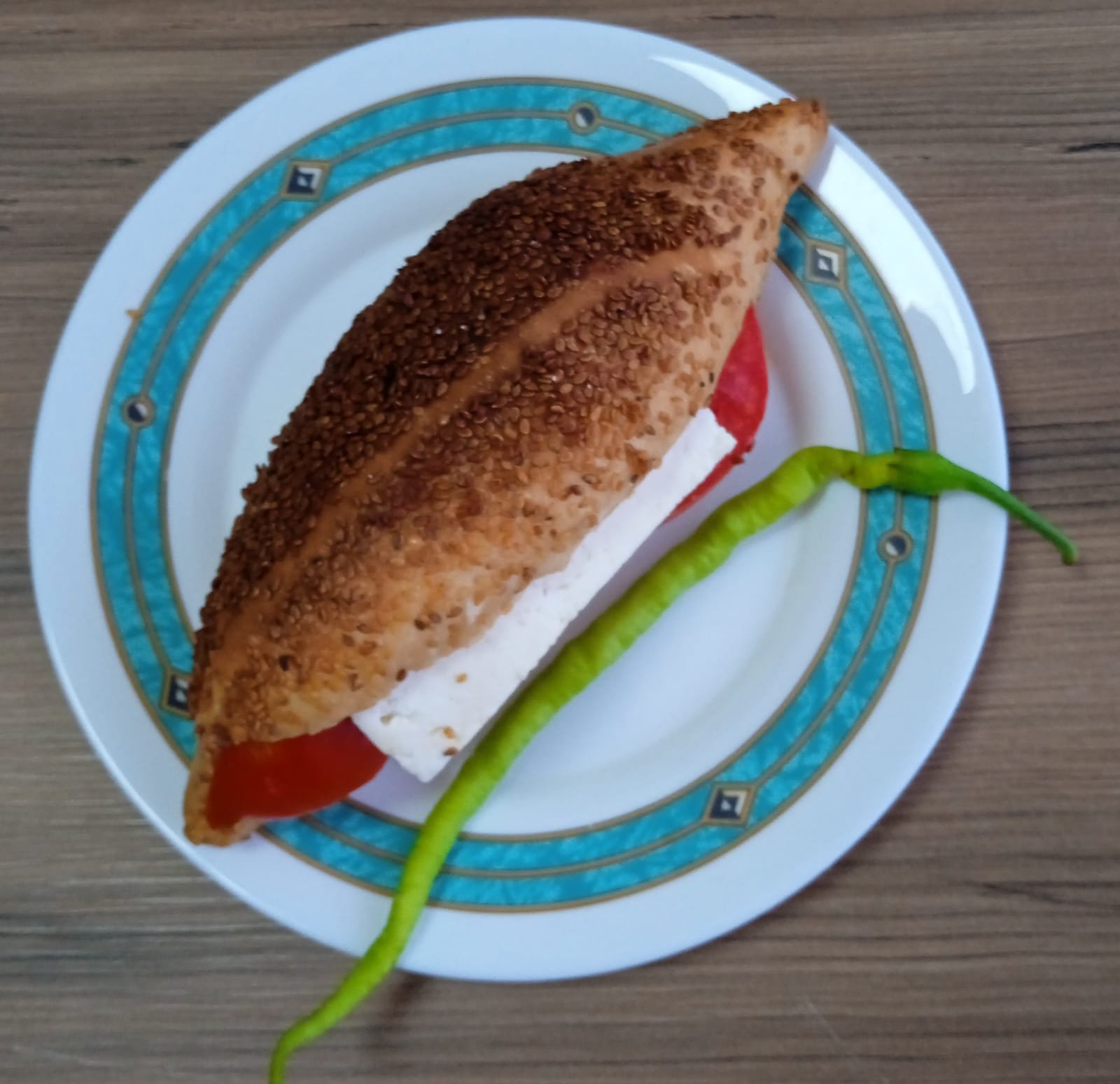
Ask for a kumru in İzmir and two different sandwiches may arrive. One is cold and simple, filled with tulum cheese, tomato and green pepper. The other is hot, rich and grilled, with sucuk, salami, melted kaşar and tomato. Both belong to the story of İzmir Kumrusu. What connects them is not one fashionable filling but the distinctive bread.
This is where the registration becomes useful. It does not turn lunch into a legal lecture, and it does not declare one shop the winner. It defines the product that may be sold as registered İzmir Kumrusu: the bread, the two recognised serving styles, the link with İzmir and the way the protected name should be shown.
Start with the bread, not the filling
The easiest way to misunderstand kumru is to treat it as a list of ingredients. The registered product begins with İzmir Kumru Ekmeği, a bread with a wider middle and ends that narrow towards the tips. Its shape is traditionally compared with the body of a dove—the meaning of kumru in Turkish.
The specification allows the bread to be made with or without chickpea yeast. The two methods differ, but both produce a shaped, fermented loaf with a molasses treatment and a controlled bake. Sesame may appear on the surface, yet the bread should not become a hard, dry shell or a soft anonymous bun. The goal is a loaf sturdy enough to hold its filling while remaining recognisably different from an ordinary toast sandwich.
That is why a generous pile of sausage and cheese does not, by itself, make a sandwich an İzmir kumrusu. A generic roll filled with the right-looking ingredients may be enjoyable, but it misses the element that gives the registered product its strongest identity.
The older cold version is not a lesser kumru
For many visitors, “kumru” means the hot sandwich associated with Çeşme: toasted bread, grilled meats and melted cheese. İzmir’s older version is quieter. The bread is opened without being split completely, then filled with İzmir or Bergama tulum cheese, tomato and green pepper and served cold.
Its simplicity makes the bread and cheese more visible. It also explains why local descriptions sometimes sound contradictory. One person remembers kumru as a cold bakery snack; another thinks first of the hot, meat-filled version. They are not necessarily talking about different products. They are describing two stages of the same local food tradition.
Why the hot version became the familiar one
The registered description places the rise of the hot style after the 1940s. In this version, the bread is warmed over charcoal, its inside is prepared for the filling, and grilled sucuk and salami are combined with kaşar and tomato. The result is richer, more filling and easy to adapt, which helped it travel beyond the bakery counter and become a restaurant and street-food favourite.
Modern shops often add sauces, pickles, extra meats or different cheeses. Those variations can be part of a good meal, but they should not be confused with the core registered definition. “More ingredients” is a style choice, not proof of authenticity.
What the registration protects—and what it does not
İzmir Kumrusu is registered as a Turkish geographical indication under registration number 262. The protected framework links the product to İzmir Province, describes the bread and the two recognised serving styles, and requires all production stages of the registered product to take place within the province.
The name and geographical-indication emblem should appear on the product or packaging. When that is impractical, they should be visible in the business. For a customer, this is a useful sign that a shop is making a formal registered-product claim rather than using “İzmir-style” as a loose menu description.
The registration does not guarantee that every registered kumru will taste identical. It does not measure hospitality, freshness at a particular hour or whether you personally prefer the cold or hot version. It also does not make every creative sandwich illegitimate. It simply separates the protected product standard from the much wider world of kumru-inspired sandwiches.
How to order without getting lost in terminology
The most useful question is simple: “Is this the cold traditional version or the hot version?” That immediately tells you more than asking whether the shop’s kumru is “original”.
Next, look at the bread. It should have the characteristic fuller centre and tapered form, with a surface and texture that feel closer to a local bakery product than to a standard industrial sandwich roll. For the cold version, expect tulum cheese, tomato and green pepper. For the hot version, expect grilled meats, kaşar and tomato, with optional variations explained as additions rather than as the whole identity of the dish.
Finally, judge the food as food. The registration can explain what the product is meant to be; it cannot replace a fresh loaf, balanced filling and careful preparation. A modest cold kumru made with good bread may reveal more about İzmir’s tradition than an overloaded sandwich that hides the bread completely.
The takeaway
İzmir Kumrusu is not defined by the biggest filling or the hottest grill. Its identity begins with a local bread and continues through two legitimate traditions: the older cold version and the later hot version. Once that distinction is clear, the registration stops feeling like bureaucracy and becomes what it should be—a concise guide to understanding what is actually on the plate.